

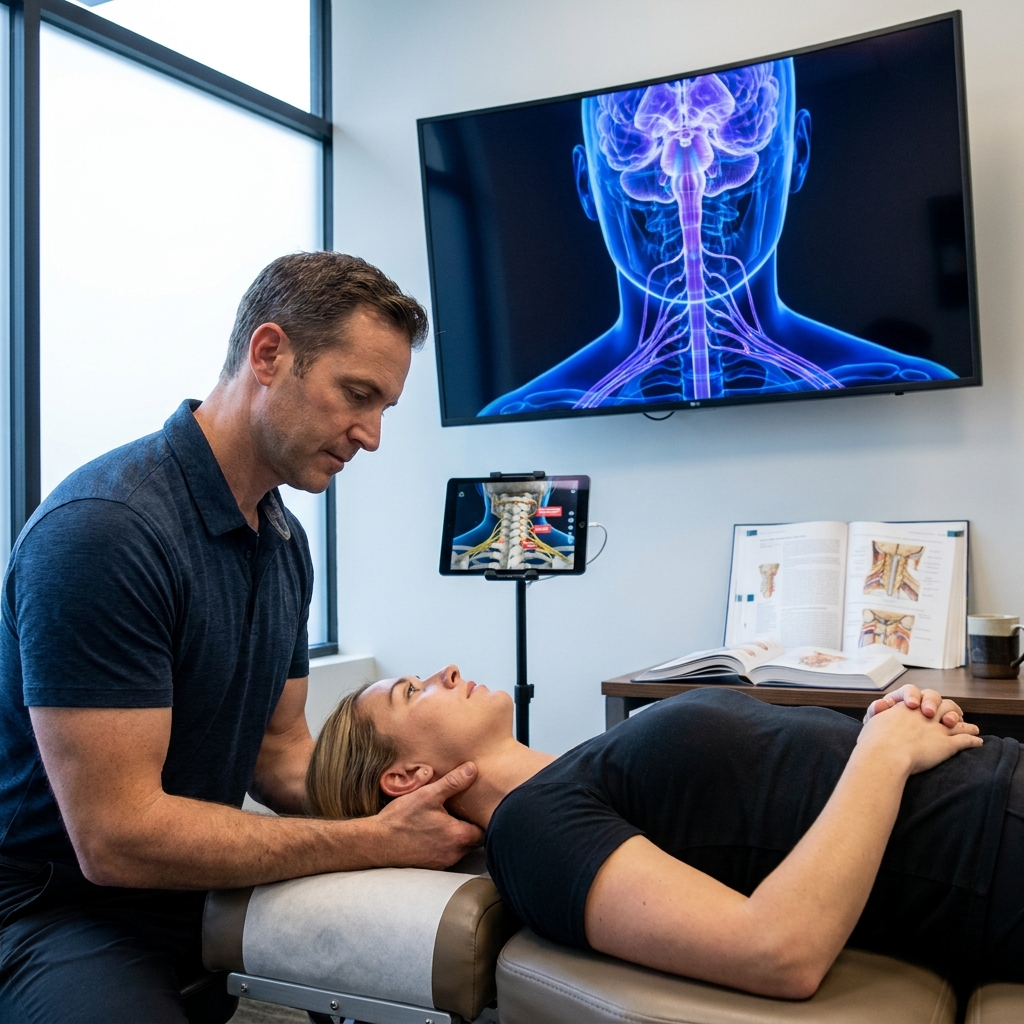
Neuroscience in the Chiropractic Adjusting Room
Every spinal adjustment is more than a mechanical correction; it is a direct conversation with the nervous system. When chiropractors deepen their study of anatomy and neuroscience, that conversation becomes clearer, safer, and more effective. Instead of relying mainly on experience and pattern recognition, the practitioner can connect each contact point, line of drive, and patient response to specific neural pathways and structures. This kind of knowledge does not remove the art of chiropractic care; it gives that art a stronger scientific backbone. The result is clinical decision making that feels more confident for the chiropractor and more reassuring for the patient.
From Bone Focus to Nervous System Focus
Modern chiropractic care increasingly centers on how the spine and extremities influence the brain and wider nervous system. A chiropractor who studies neuroanatomy understands that adjusting a restricted segment is not only changing joint mechanics but also modulating sensory input to the brain. That awareness shapes everything from the selection of technique to the speed and amplitude of the thrust. It also helps the practitioner appreciate how pain, posture, and movement patterns are rooted in neural processing, not only in local tissue changes. With this lens, the goal of care expands from reducing local discomfort to promoting healthier communication along the entire neuro spinal axis.
Studying neuroscience also clarifies why some patients respond quickly while others progress slowly. Concepts like central sensitization, neuroplasticity, and descending inhibition give chiropractors language for what they already observe in practice. A patient with long standing pain may have a nervous system that has become more sensitive, and knowing this encourages gentler approaches and realistic expectations. Another patient may show rapid improvements as the brain receives clearer proprioceptive signals after adjustments. When chiropractors understand these mechanisms, they can match their clinical strategies to the true underlying nervous system state rather than guessing in the dark.
Sharpening Assessment Skills with Detailed Anatomy Study
Careful, anatomy informed assessment is the foundation of effective chiropractic care. When practitioners regularly review spinal and regional anatomy, they refine their palpation and observation skills in powerful ways. They can distinguish more accurately between joint restriction, muscular guarding, fascial tension, and nerve irritation. This helps them avoid over treating an area that is compensating rather than causing the complaint. Detailed mental maps of vertebrae, ligaments, muscles, and nerve routes allow every exam finding to snap into place more logically.
Neuroscience study adds another layer to this clinical picture by connecting structures to function. When a chiropractor knows which dermatomes and myotomes relate to each spinal level, neurological screening becomes more meaningful and efficient. Subtle changes in reflexes, strength, or sensation are no longer vague red flags; they are specific clues to where the nervous system needs support or further medical evaluation. This sharper assessment does not only protect patient safety, it also makes treatment plans more focused. Patients feel the difference when their chiropractor can explain exactly which structures are involved and how each visit will target them.
Making Adjustments Safer and More Precise
Chiropractic adjustments ask the body to change quickly, and that makes precision non negotiable. Regular anatomy review reminds practitioners how close their hands are to sensitive neural tissues, blood vessels, and vital organs. Knowing those exact relationships builds a healthy respect for lines of drive, contact points, and patient positioning. It also helps chiropractors tailor forces to each region, using less intensity where structures are more vulnerable and more support where tissues are robust. Over time, these small technical refinements reduce the risk of irritation and improve patient comfort.
Neuroscience further refines adjusting choices by clarifying how different techniques influence the nervous system. High velocity, low amplitude thrusts, lower force instrument adjustments, and mobilization techniques each send distinct sensory signals to the brain. A chiropractor who understands this can choose methods that calm an overactive nervous system or awaken an under responsive one. For example, a patient with high anxiety and muscle guarding may benefit from slower, lower force inputs that do not overwhelm their sensory system. Another patient with poor proprioception may respond better to crisp, precise adjustments that sharpen body awareness, all guided by sound neurophysiological principles.
Turning Neuroscience into Patient Friendly Explanations
Technical knowledge matters little if patients cannot understand how chiropractic care helps them. Studying anatomy and neuroscience gives chiropractors fresh, accurate ways to explain spinal health in everyday language. Instead of describing an adjustment as simply putting bones back in place, the practitioner can describe it as helping the brain receive clearer messages from the body. This shift feels more respectful to patients who want scientifically grounded reasoning. It also supports better adherence, because people are more likely to follow care plans when they understand the logic behind them.
When chiropractors communicate neuroscience well, they can also reframe chronic pain in a hopeful way. Patients learn that their brains and nervous systems are capable of change, and that repeated, well chosen adjustments can support healthier movement and perception over time. Simple visuals, careful metaphors, and accurate explanations of nerve pathways make these ideas real. Patients begin to see home exercises, posture habits, and lifestyle changes as ways to retrain their nervous systems, not just tasks assigned by the clinic. This collaborative understanding builds trust and encourages long term engagement with spinal health.
Studying Smarter: Practical Learning Rituals for Busy Chiropractors
Many chiropractors want to deepen their anatomy and neuroscience knowledge but struggle to find time around a full clinic schedule. Small, consistent study rituals are more realistic than occasional marathon sessions. Setting aside fifteen focused minutes before or after clinic to review one region or one neural pathway can steadily rebuild and expand mental maps. Integrating quick reviews into daily tasks, such as mentally labeling structures during palpation, turns active practice into an ongoing learning lab. Over weeks and months, this rhythm creates a noticeable difference in clinical clarity.
Choosing resources that connect directly to chiropractic scenarios also makes study time feel more relevant and engaging. Case based learning, regional dissection images, and neurological flow charts that tie into common presenting complaints are especially helpful. Discussing interesting anatomical or neurological details with associates or staff keeps the material fresh and social. Some clinics even schedule brief learning huddles where one team member shares a short anatomy or neuro concept each week. With these habits, continued study feels like a natural part of practice life rather than an extra burden.
Building a Clinic Culture That Loves Anatomy
When a chiropractor values anatomy and neuroscience, that attitude can shape the entire clinic culture. Team members begin to appreciate that every position, stretch, or support the patient receives is grounded in an understanding of how the body and nervous system work. Front desk staff can communicate more confidently about why progress assessments matter and how neurologically oriented care takes time. Assistants who understand basic spinal and neural concepts can set up patients more thoughtfully and spot small changes worth reporting. This shared knowledge base makes the whole team feel more invested in clinical outcomes.
Patients notice when a practice is built on more than routine protocols. Educational posters, models, and simple explanations during visits all reflect a commitment to anatomical and neurological accuracy. Over time, this positions the chiropractor as a trusted authority on spinal and nervous system health in the community. A culture that celebrates ongoing learning naturally attracts patients who value thoughtful, evidence informed care. In this environment, every adjustment, recommendation, and conversation becomes an opportunity to apply and refine the deep anatomical and neuroscience knowledge that sets expert chiropractic practitioners apart.