

Evidence-Based Integrative Spinal Care Patients Can See and Feel
Integrative spinal care brings adjustments, therapeutic exercise, lifestyle coaching, and education together inside a single, coordinated chiropractic plan. Rather than treating each symptom in isolation, the chiropractor organizes multiple evidence-supported tools around the way the spine actually functions in daily life. This approach respects the science that shows spine pain is influenced by joints, muscles, nerves, movement patterns, and stress responses working together. When those components are addressed as a team instead of individually, clinical results become easier to track, explain, and reproduce. That is where evidence-based outcomes turn from abstract research into practical decisions in the treatment room.
For patients, integrative care grounded in evidence feels different from a scattered trial-and-error journey. Every element of the plan has a purpose that links back to a goal they helped define. Each reassessment becomes an opportunity to see whether the strategy is performing as expected instead of guessing. When results are not on target, the chiropractor can adjust frequency, techniques, or supportive services based on measurable findings. Over time, this creates a cycle of continuous improvement that benefits the patient and strengthens the clinic’s clinical reputation.
From Isolated Adjustments to Integrated Care Plans
Spinal manipulation remains the core skill of chiropractic, but evidence has increasingly highlighted the value of pairing it with complementary interventions. Clinical research on spine pain often evaluates combinations of manual therapy, exercise, and education because real life rarely presents a single-factor problem. An integrative chiropractor uses that research pattern as a model, assembling care plans that blend adjustments with targeted muscle work and movement retraining. Instead of asking which single technique is best, the clinical question becomes which combination best fits this patient’s presentation and goals. This shift moves the practice from procedure-focused scheduling to outcome-focused planning.
A structured integrative plan also helps patients understand why they are doing more than “just getting adjusted.” The chiropractor can map each component to a research-supported purpose while staying within scope and philosophy. Patients start to see their visits as steps in a process rather than isolated events, which improves follow-through and engagement. That clarity makes it easier to maintain consistency when life gets busy or symptoms fluctuate. Over time, the plan feels less like a collection of visits and more like a spine health strategy.
- Adjustments address joint motion and nervous system irritation identified in the exam.
- Rehab exercises reinforce new patterns so gains from care hold between visits.
- Brief education sessions help patients understand triggers that may aggravate their spine.
Clinical Outcomes That Matter: Pain, Function, and Daily Life
Evidence-based integrative spinal care centers on outcomes that patients genuinely notice in their routines. Pain intensity is important, but research consistently emphasizes function, participation, and quality of life as equally meaningful markers. Chiropractors can mirror that emphasis by asking questions that connect directly to real tasks like lifting a child, working a full shift, or sleeping through the night. When goals are framed this way, treatment choices naturally align with what the patient values most. This alignment also makes outcome conversations clearer, because success is tied to specific abilities rather than vague comfort levels.
Structured outcome tools support these conversations without overwhelming the visit. Short, validated questionnaires and simple numeric scales give the chiropractor and patient a shared language for tracking change. The numbers do not replace clinical judgment or patient stories, but they anchor both in something observable over time. As trends emerge, they guide decisions about continuing, intensifying, or tapering components of care. That disciplined feedback loop is the hallmark of evidence-based integrative practice.
- Pain scales show whether intensity is shifting in response to recent visits.
- Disability or function questionnaires reflect changes in work, home, and recreation abilities.
- Sleep or activity questions reveal how spine health is influencing overall wellbeing.
Objective Measures Strengthen Subjective Wins
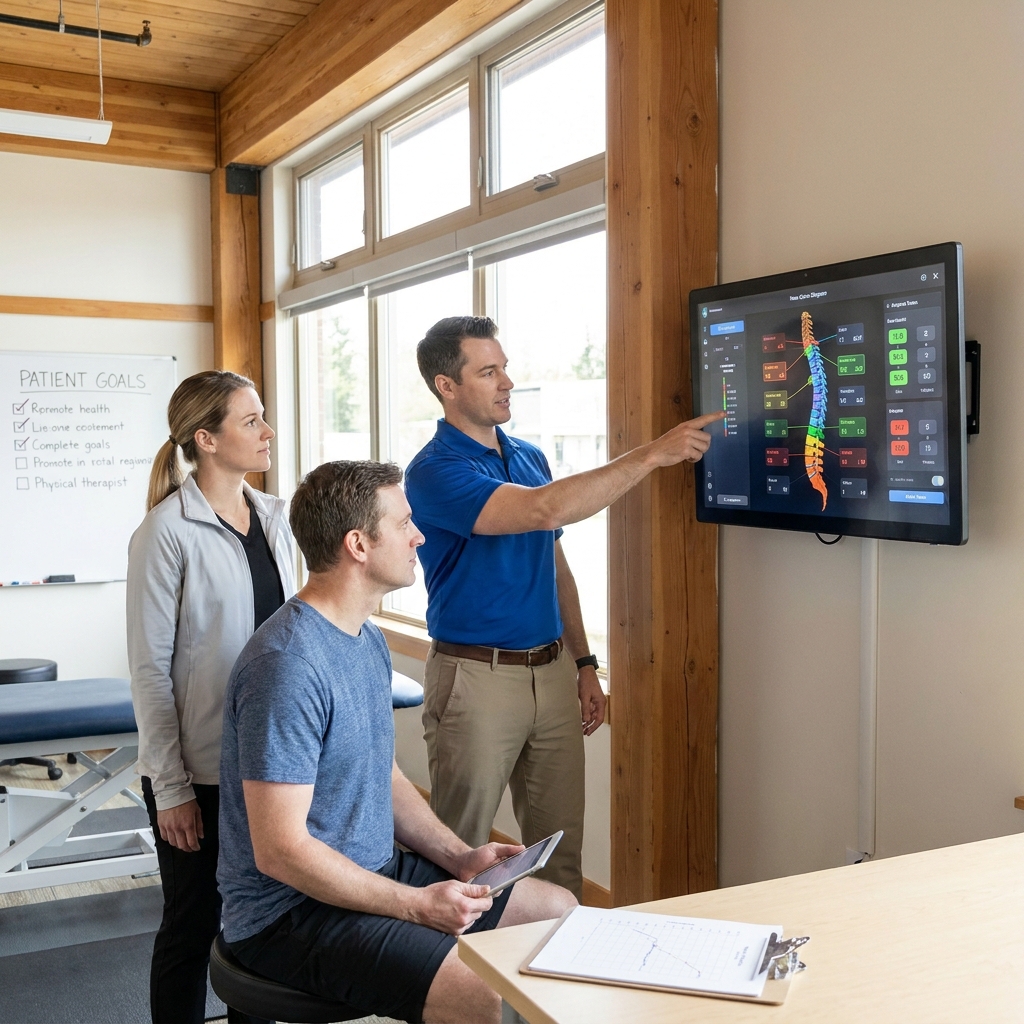
Patients often describe progress in terms like feeling looser, steadier, or more confident, which are valuable but hard to quantify. Objective measures bring another layer of clarity to those subjective wins by documenting changes the patient can also see. Range of motion readings, muscle endurance tests, or simple balance assessments can often be performed quickly in the treatment room. When repeated at planned intervals, they create a visual storyline of progress that complements symptom reports. This combination of hard and soft data makes the value of integrative care easier to explain to patients, families, and other health professionals.
Objective tests are most powerful when chosen thoughtfully rather than added randomly to an exam. Each measure should connect to a primary functional goal and a component of the treatment plan. That way, improved scores become a direct reflection of how the integrative strategy is working, not just a collection of numbers. When results plateau, the same data help the chiropractor decide whether to shift emphasis, add new exercises, or change visit frequency. In this way, objective outcomes become tools for decision-making, not just documentation content.
- Spinal or joint motion assessments track mobility changes associated with adjustments and stretching.
- Strength or endurance checks show whether stabilizing muscles are supporting new movement patterns.
- Balance or coordination tasks indicate improvement in neuromuscular control around the spine.
Case Pathways That Reflect Current Research
Evidence-based integrative spinal care benefits from clear case pathways that outline how a typical episode of care might unfold. These pathways are not rigid recipes, but practical guides shaped by current spine research and clinical experience. They help the chiropractor decide when to emphasize manual therapy, when to prioritize exercise, and when to taper visits while building self-management. Thoughtful pathways also define appropriate checkpoints for reassessment so that progress is never left to assumption. This structure protects patients from both under-treatment and unnecessary prolonged care.
Within those pathways, personalization remains essential. Each patient arrives with a unique mix of biomechanics, workload, stress, and history that influences response to care. Integrative chiropractors use pathway milestones as reference points, not absolute rules, and adapt based on how outcomes evolve. If a patient is progressing faster than expected, the plan can shift toward maintenance and prevention activities sooner. If progress is slower, the same pathway signals when to strengthen education, refine exercises, or consider co-management.
- Early-phase visits may focus on pain relief, safety, and calming irritated tissues.
- Middle-phase care often emphasizes restoring mobility, strength, and movement confidence.
- Later-phase sessions reinforce independence and strategies to prevent recurrence.
Integrating Supportive Therapies Without Losing Focus
Integrative spinal care can include soft tissue techniques, guided stretching, instrument-assisted tools, and targeted home care, but adding options should never create confusion. Evidence-based practice asks whether each supportive therapy improves the outcomes that matter, not simply whether it is available. Chiropractors can guard against scattered plans by giving every technique a clear role tied to an assessed finding. When that role has been fulfilled, the therapy is tapered or transitioned rather than continued indefinitely by habit. Patients appreciate this clarity because it signals that their time and resources are respected.
Clear expectations around supportive therapies make them feel purposeful instead of like optional add-ons. The chiropractor explains why a particular technique is recommended now, how its impact will be evaluated, and when it is likely to change. This transparency turns each service into a purposeful piece of the integrative strategy rather than a stand-alone product. Over time, patients learn to connect specific therapies with specific goals, which strengthens trust and adherence. That trust is essential when it is time to reduce passive care and lean more on active self-management.
- Manual muscle work may target guarded areas that limit the effect of adjustments.
- Short supervised exercise blocks can teach precise form for key movements.
- Home strategies like heat, pacing, and ergonomics extend clinic gains into daily life.
Communicating Evidence-Based Wins in Everyday Language
Even the strongest outcomes lose impact if they are not communicated in a way patients understand. Integrative chiropractors translate research concepts into everyday language that connects directly to each patient’s story. Instead of quoting study details, they summarize how similar care plans have helped people return to activities the patient cares about. They pair outcome scores with relatable explanations so the numbers feel meaningful, not abstract. This communication style turns evidence from something distant into a shared tool for planning next steps together.
Regular, structured progress updates prevent surprises and keep motivation high during longer care episodes. When patients see graphs, trend summaries, or simple comparisons to their first visit, they can better appreciate subtle but important improvements. If goals have not been met, the same process makes it easier to adjust the plan collaboratively rather than reactively. Patients feel like partners instead of recipients, which aligns with the patient-centered focus at the heart of integrative spinal care. In the long run, those clear conversations are as important as any single technique delivered on the table.
- Link every metric to a real-life task the patient has mentioned.
- Use plain language to describe what has improved and what still needs work.
- Invite questions so patients can clarify concerns before they grow into frustration.