

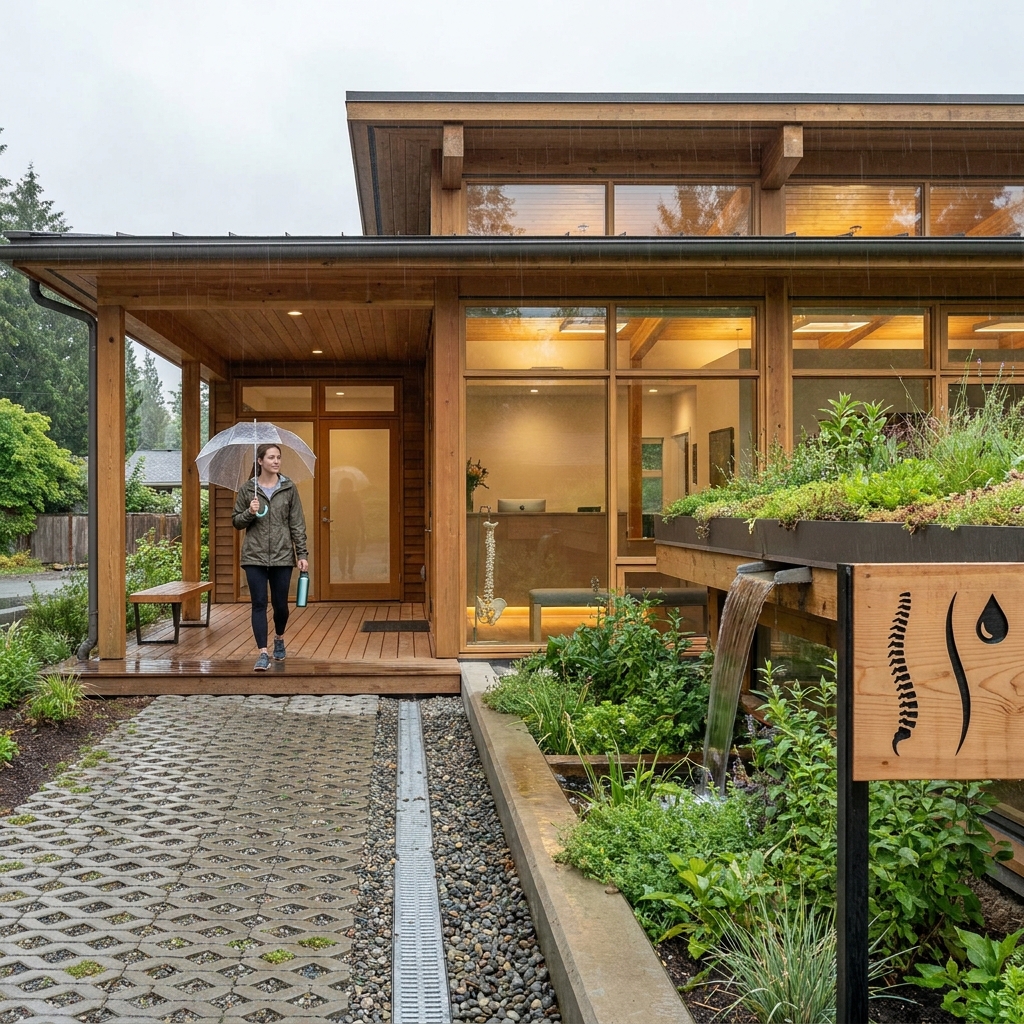
Rain-Ready Spine Care: An Introduction
Every visit to a chiropractic clinic starts long before a patient reaches the adjusting table. The parking lot, sidewalks, and outdoor surroundings quietly shape mood, muscle tension, and the way a person carries their body. When heavy rain brings flooded curbs, slick walkways, and noisy downspouts, the body often responds with guarded movement and extra stress. Thoughtful stormwater design turns those same rainy days into calmer, safer experiences that support spinal health. Rain gardens, stormwater features, and eco-drainage projects help the land function better, and that healthier landscape supports every spine that passes through your doors.
For chiropractors, sustainability is not only an environmental talking point; it is a practical extension of whole-person care. A clinic that manages rainwater wisely reduces slip risks, moderates temperature swings, and softens the sensory overload many patients feel in busy urban environments. These details might seem small, yet they influence gait, posture, and the ability to relax before an adjustment. When patients arrive feeling steadier and less rushed, their bodies can respond more efficiently to care. Storm-smart design is another way to align your practice environment with your clinical philosophy of long-term wellness.
From Runoff to Recovery: Why Eco-Drainage Belongs at a Chiropractic Clinic
Traditional pavement and gutters push rainwater away as quickly as possible, often creating large puddles, glare, and erosion near entry points. By contrast, rain gardens and eco-drainage features are designed to capture, slow, and filter stormwater where it falls. These elements may include shallow planted basins, bioswales along parking areas, and permeable surfaces that allow water to soak into the ground. Together, they reduce standing water and redirect runoff away from patient routes and building foundations. The result is a setting that feels more stable underfoot and more visually soothing for patients navigating pain or limited mobility.
There is also a strong alignment between eco-drainage and the preventive mindset of chiropractic care. Rain gardens protect soil structure the way spinal care protects joint function, supporting long-term resilience instead of chasing quick fixes. Patients who value wellness often notice when a practice lives its values in visible, practical ways. Seeing native grasses, flowering perennials, and carefully designed drainage areas signals a clinic that thinks beyond the next appointment. That subtle trust can translate into better adherence to care plans and a stronger sense of partnership in each patient’s wellness journey.
Microclimate Matters: Rain Gardens That Support Comfortable Bodies
Many patients arrive at chiropractic appointments already dealing with muscle guarding, joint stiffness, or nerve irritation. Walking from a hot, reflective parking lot into an overcooled lobby can trigger additional tension as the body tries to adapt quickly. Rain gardens help moderate those abrupt shifts by cooling surrounding air and softening harsh surfaces with living, moisture-loving plants. When paired with permeable pavements and light-colored hardscapes, they reduce heat buildup that can aggravate inflammation and fatigue. A more balanced microclimate around your entrance sets the stage for muscles and fascia to stay more supple, not more stressed.
The most effective rain gardens for spinal wellness share a few design priorities that go beyond aesthetics. They are positioned where they actually intercept runoff from roofs and parking lots, not just where there is leftover space. Plant choices are made for drought tolerance and storm tolerance, so the garden stays healthy without demanding constant attention from already busy clinical teams. Pathways are laid out to keep patients on dry, stable surfaces while still enjoying close views of the planted areas. Lighting, sightlines, and clear edging make it instantly obvious where to walk, reducing the subtle anxiety some patients feel about tripping or stepping in mud.
- Place rain gardens where downspouts and surface runoff naturally collect.
- Use native or climate-appropriate plants that can handle both heavy rain and dry spells.
- Separate planting zones from walkways with curbs, edging, or low barriers for safer navigation.
Movement-Friendly Site Design: Walking Paths, Slopes, and Safe Access
A well-designed eco-drainage plan does more than move water; it gently guides how people move across your site. Graded walkways that send water toward planted swales instead of toward doorways stay drier and more predictable underfoot. That matters for patients with balance challenges, neuropathy, or acute low back pain who cannot afford a slip or sudden twist. Gentle slopes, railings where needed, and textured surfaces give patients confidence to walk with a more neutral spine rather than a protective shuffle. When a patient can reach your front desk without bracing every step, you have already lowered the physical stress their body carries into the adjustment.
Eco-drainage features can also support intentional movement habits without turning your clinic into a recreation space. Short, clearly marked walking paths that skirt rain gardens provide a low-impact way for patients to warm up their joints before care or cool down afterward. Benches located near, but not inside, drainage areas encourage brief posture checks and deep breathing while patients observe the landscape. These micro-moments of movement align with many chiropractors’ recommendations for frequent, gentle activity rather than long, sporadic workouts. Over time, patients begin to associate your practice with practical, everyday ways to move better in every weather condition.
Stress Physiology, Spinal Tension, and the Sound of Rain
Stress and spinal tension often travel together, reinforcing each other in a cycle of guarded posture and shallow breathing. Views of vegetation, moving leaves, and changing sky reflections in wet surfaces can help cue the nervous system toward a calmer state. Research has linked natural scenes with reductions in heart rate and perceived stress, which can make it easier for muscles to release built-up tightness. When rain falls into planted basins rather than pounding loudly on metal or concrete, the overall soundscape around your entrance becomes softer and less jarring. Patients stepping out of traffic and into this environment are more likely to downshift from fight-or-flight toward a state that accepts care more readily.
Careful stormwater design also supports sensory-sensitive patients who may feel overwhelmed by flashing lights, sharp echoes, and visual clutter. Breaking up large hard surfaces with planted drainage channels interrupts long, glaring sightlines that can fatigue the eyes and nervous system. Subtle wayfinding cues, such as a line of rain-tolerant shrubs leading to the main door, keep navigation simple even during heavy weather. When patients know they can arrive without battling wind-swept puddles or confusing entrances, they tend to keep appointments more reliably. In this way, eco-drainage indirectly supports continuity of care and more consistent outcomes.
Staff Wellness and Practice Culture in a Storm-Smart Clinic
Chiropractic teams spend many hours on their feet, lifting, bending, and focusing intensely on patient needs. Walking through flooded parking lots during storms or dodging icy patches created by poor drainage adds extra strain to already demanding days. A well-planned stormwater system protects staff routes from chronic puddling and erosion, minimizing the daily micro-stresses that accumulate in the low back and shoulders. When employees can park, enter, and exit the clinic without constant vigilance about their footing, they conserve physical and mental energy for patient care. Over time, this contributes to lower injury risk and a more sustainable career in hands-on healthcare.
Eco-drainage features can also become a quiet source of pride and connection for your team. Staff break areas that overlook rain gardens or bioswales give employees a brief visual reset between appointments, especially on weather-heavy days. Short walks along well-drained paths provide a chance to restore posture after charting or long adjusting blocks. When team members feel that their workplace protects both the environment and their bodies, practice culture shifts toward shared ownership of wellness. That culture is often palpable to patients, who notice when everyone from the front desk to the adjusting rooms seems genuinely grounded and supported.
Practical Steps to Launch a Rain Garden or Eco-Drainage Project
Bringing rain gardens and eco-drainage into your chiropractic setting starts with understanding how water currently moves across your property. During the next few storms, observe where puddles form, which downspouts cause splashing near walkways, and where erosion shows up along curbs. Document these patterns with simple notes and photos so you can clearly communicate needs to a landscape professional. An experienced designer or civil engineer can then help you size rain gardens, choose compatible materials, and ensure compliance with local regulations. This planning phase protects you from guesswork and helps integrate stormwater features seamlessly into existing patient routes and parking layouts.
Once a basic plan is in place, consider the patient experience at each step of implementation. Prioritize improvements that immediately enhance safety and access, such as correcting drainage at entries and along primary walkways. Next, add planting and visual elements that make the new infrastructure feel welcoming rather than purely functional. Simple educational signage can briefly explain how the rain garden supports both community health and a calmer visit to the chiropractor. By phasing the project and continually checking it against your clinical goals, you create an outdoor environment that is as intentional and supportive as the care delivered inside.